
Which Kia Sportage Hybrid Is Perfect for You?
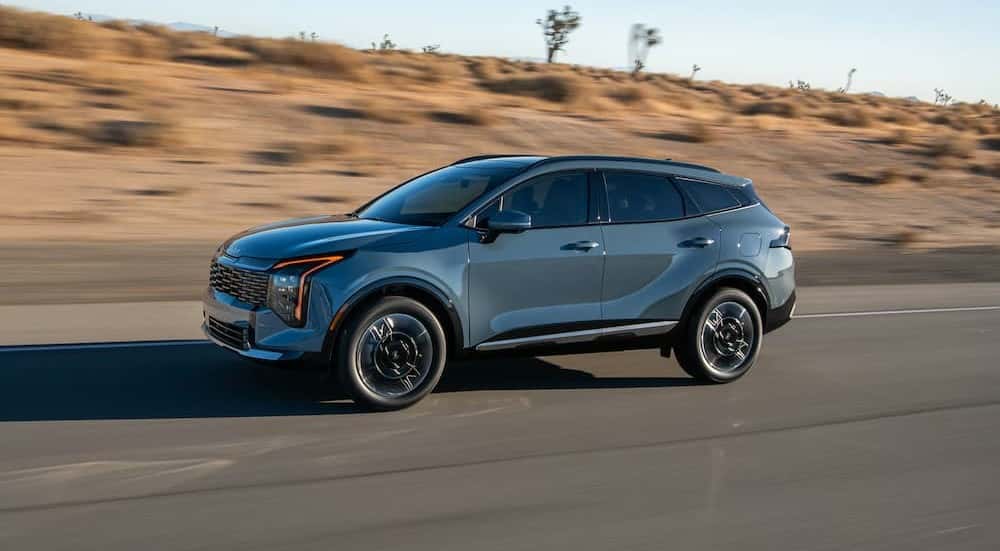
When shopping for a vehicle, narrowing down all of your options to decide on the perfect one for you isn’t always as easy as it might seem. For example, let’s say you’ve decided that you want a Kia (off to a great start), and you know you want a compact SUV (doing even better now), which brings you to the Kia Sportage. On top of that, you know that you want hybrid engineering for great performance and excellent fuel efficiency. However, when you come to us looking for a 2026 Kia Sportage hybrid for sale, you soon discover that you still have a significant decision to make: choosing between the hybrid and plug-in hybrid electric vehicle (PHEV) versions of the Sportage. This decision trips up a lot of folks, so let’s dig into what each of these models offers and figure out which one is right for you.
What’s the Difference Between a Hybrid and a PHEV?
Before we dive into the specifics of these two models, we must first address a crucial general question, as they are distinct entities. In terms of similarity, both standard hybrids and plug-in hybrids feature a conventional gasoline engine along with one or more electric motors powered by a battery system. These aren’t all-electric models, so you still need to fill them with gas, but they’re designed to use the electric motor system to help boost performance and fuel efficiency, so you don’t have to stop as often. The key difference between these types of vehicles is how the hybrid systems are designed.
With a standard hybrid, the engine supports the electric motor(s), but you don’t interact with it much directly. It’s powered by a battery system that the engine recharges, similar to a generator, as you drive. A PHEV, however, lives up to its name, and you have to recharge the battery for the hybrid system by plugging it into an outlet or charging station, just like an all-electric model. The major perk of a plug-in hybrid is that it offers limited all-electric miles where only the battery and motor are used, not the engine. You can make short trips, like a quick errand, without using any gas. Both options are great. A PHEV is an excellent test run if you’re thinking of going all-electric in the future, but you’re not sure how well it would work for you right now.
Hybrid Performance
Now that we have a good sense of how these two hybrid options function, let’s examine what each brings to the table. The standard Sportage is already an excellent compact SUV, but the Sportage hybrid trims elevate performance and provide terrific gas mileage. For comparison’s sake, the standard engine for the 2026 Sportage provides 187 hp and 178 lb-ft of torque. Front-wheel drive models achieve an estimated 25 MPG in the city, 33 MPG on the highway, and 28 MPG in combined fuel efficiency, with slightly lower numbers for all-wheel drive models. That’s impressive for a small SUV like this, but hybrid performance definitely lets you go further in a Kia Sportage.
Sportage hybrid models feature a 1.6L turbocharged I-4 engine that delivers 231 hp and 271 lb-ft of torque, providing a fantastic driving experience on the road each day. Not only that, but a Sportage hybrid also achieves an estimated 41 MPG in the city, 44 MPG on the highway, and 42 MPG in combined fuel efficiency with front-wheel drive (FWD). Going with all-wheel drive (AWD) lowers the estimate to an estimated 35 MPG of combined fuel efficiency, but that’s still much better than the standard engine. This perfectly illustrates why hybrid models are so popular, since you get a small SUV that feels great on the road and lets you take care of everything you need to do each day with fewer stops for gas.
Plug-in Hybrid Performance
How does the PHEV version of the Sportage compare to those two engines? The plug-in hybrid Kia Sportage features a similar 1.6L turbocharged engine, but its advanced system produces 268 hp and the same torque as the hybrid, providing a more exhilarating driving experience on the road. Fuel efficiency with the Sportage PHEV is interesting for a couple of reasons, starting with the fact that you can only get a plug-in hybrid Sportage with AWD. FWD models aren’t available, so you get excellent performance and handling, while still enjoying an estimated 36 MPG of combined fuel efficiency with an AWD Sportage plug-in hybrid.
What really sets the Sportage plug-in hybrid apart is that it offers a limited all-electric range, allowing you to drive without using any gas or emitting emissions from the engine. The plug-in 2026 Sportage can travel approximately 33 miles on a full charge without using any gasoline, which is quite close to the average daily driving distance for most Americans. If you live close to your workplace or the school your kids attend, you may be able to avoid using any gas during your daily driving. Of course, you’ll still need to use the engine for longer trips or days where you need to run a lot of errands, but this all-electric range is a terrific perk.
Options for the Kia Sportage Hybrid and PHEV
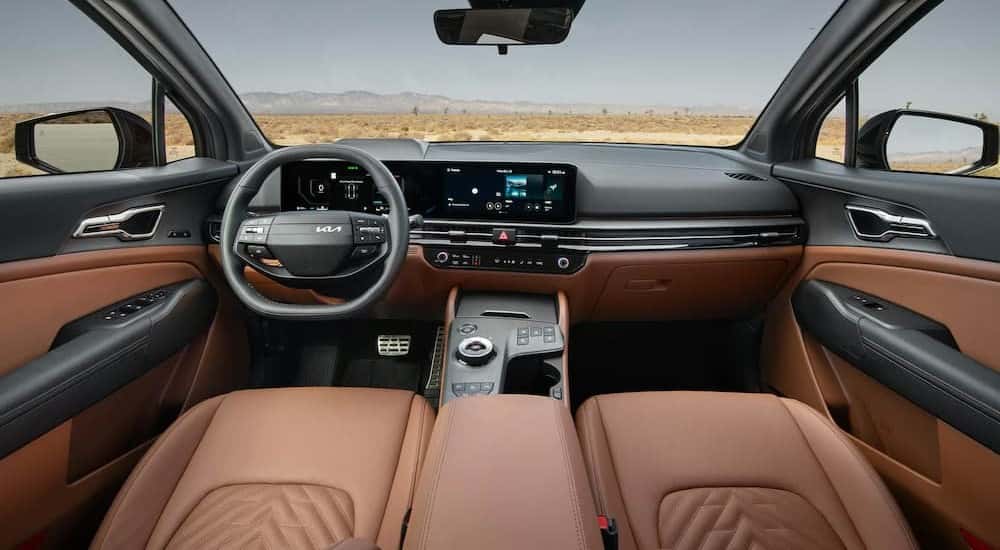
Performance aside, both of these hybrid models offer numerous trims for you to choose from and a range of options to enhance your daily drive. The Sportage hybrid is available in five different trim levels, starting with the Hybrid LX, which features dual-zone automatic climate control, a six-way adjustable driver’s seat, cloth seating, and a pair of 12.3-inch screens for the infotainment and instrument displays. Moving up in trim levels unlocks enhanced features, including a ten-way power-adjustable driver’s seat with power lumbar support, an eight-way power-adjustable front passenger seat, and heated front seats, all accompanied by comfortable SynTex seating. While safety features like Forward Collision-Avoidance Assist and Lane Keeping Assist are standard, higher trims add Blind-Spot Collision Warning and other features.
Looking at the plug-in hybrid version of the Sportage, Kia simplifies things by offering only two trim levels for you to choose from. You essentially bypass the bottom few trims of the standard hybrid model, providing you with more fantastic features to enjoy, regardless of which PHEV Sportage you choose. The starting X-Line trim for the plug-in hybrid has a ten-way power driver’s seat, heated front seats, and SynTex seating that looks and feels great. A Blind-Spot Collision Warning is standard in the plug-in hybrid Sportage, along with a six-speaker sound system and a wireless charging pad. If you want the finest features that Kia offers, the X-Line Prestige trim provides an active Blind-Spot Collision-Avoidance Assist system, an eight-way power front passenger seat, ventilated front seats, a head-up display on the windshield, and an eight-speaker Harman Kardon Premium Surround Sound system for an exceptional audio experience.
Which of These Hybrid SUVs Is Right for You?
The answer to this ultimately comes down to what you’re looking for in your next ride and the features you want in a compact SUV. Both models offer excellent performance and impressive fuel economy. The standard hybrid allows you to choose between FWD and AWD, resulting in the best possible fuel efficiency. Going with the PHEV provides you with some all-electric driving range and makes it easier to get the nicest features inside the Sportage, but you do lose a bit of gas mileage, and you’ll need to charge your vehicle sometimes. These are both fantastic compact SUVs, and there’s no wrong answer here. It simply depends on your preference. If you’re still unsure, we’re here at Rusty Wallace Kia of Knoxville to help you explore different Sportage models and figure it all out.

0 comment(s) so far on Which Kia Sportage Hybrid Is Perfect for You?