


2026 Kia Sportage Hybrid vs Gas Models: Which Is Right for You?
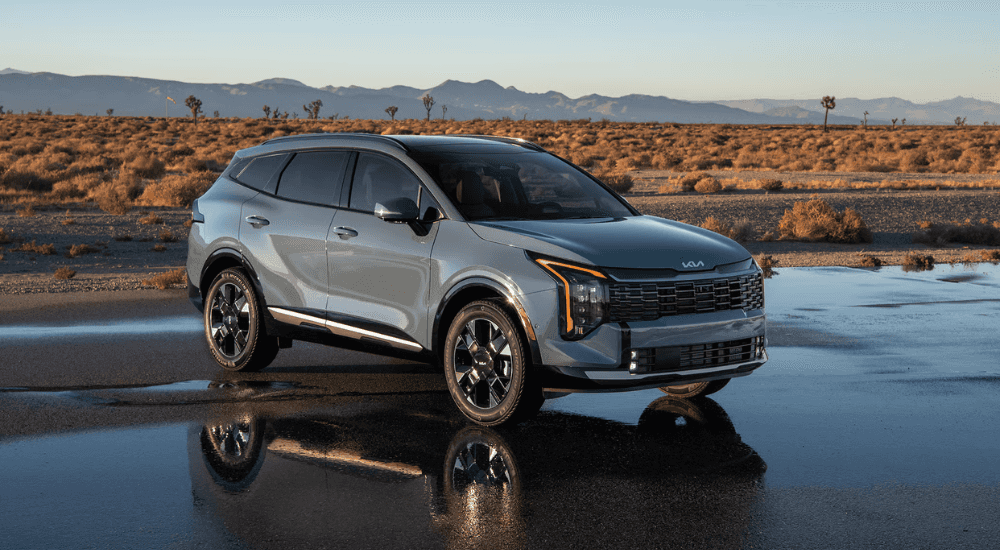
Shopping for a Kia Sportage for sale near Clinton led you to a conundrum of sorts–the choice between a gas-powered Sportage, a hybrid, or a plug-in hybrid. The options are too good to be ignored, especially with the 2026 Sportage’s dynamic performance, bold styling, innovative tech, feature-rich packaging, and exceptional warranty coverage.
So, how do you choose? The decision comes down to how you drive, how you value fuel economy, and which features matter most or have the most significant impact on your daily life.
Every 2026 Sportage, regardless of its heartbeat, boasts a thoughtfully designed interior and modern technologies, but they diverge in handling, price, and efficiency. Here’s a closer look at those key differences to help you find the perfect Sportage to complement your life in Tennessee.
Meet the Powertrains: Let’s Talk Horses and Torque
Every 2026 Sportage delivers the comfort, safety, and versatility that drivers in Clinton value. As a compact SUV, it’s agile, responsive, and easily adaptable to every situation, whether cruising at highway speeds, managing rush-hour traffic, or running errands in town. The key difference is what’s providing that steady stream of power under the hood.
The Traditional Sportage: Good
The gas-powered 2026 Sportage relies on what most drivers are familiar with: an internal combustion engine. The Sportage’s 2.5L inline-four engine works with a smooth-shifting eight-speed automatic transmission to produce 187 hp and 178 lb-ft of torque.
The 2.5L engine makes the 2026 Sportage responsive, predictable, and capable to the extent that it can tow up to 3,500 lbs. Kia enhances the Sportage’s appeal with its available all-wheel drive system, which provides all-season confidence and improved traction.
The Hybrid Sportage: Better
The 2026 Sportage Hybrid pushes the envelope, demonstrating that hybrid powertrains harness the benefits of an additional electric motor. The Sportage Hybrid combines its electric motor with a 1.6L turbocharged inline-four and a six-speed automatic transmission to produce an impressive 231 hp and 271 lb-ft of torque.
The Sportage Hybrid boasts a higher output, thanks to its electric motor, which provides more on-demand power. With significantly more hp and torque than the 2.5L inline-four, the Sportage Hybrid feels quicker off the line and more confident when passing or merging.
The Plug-In Sportage: Best
The 2026 Sportage PHEV brings the popular SUV closer to the all-electric realm by blending a traditional gasoline powertrain with an electric motor and battery. The 1.6L turbocharged inline-four engine, paired with a 13.8 kWh battery, produces 268 hp and 271 lb-ft of torque.
As expected, the higher output makes the Sportage PHEV more exciting and engaging to drive. Its standard all-wheel drive system adds to that experience, making it highly attractive.
At the Pump: Fuel Economies
Fuel economy is another significant difference between the Sportage, Sportage Hybrid, and Sportage PHEV. As a compact SUV, the 2026 Sportage is efficient, but its hybrid and plug-in hybrid powertrains heighten that efficiency in ways that Clinton drivers can’t ignore.
The 2026 Sportage, powered by a 2.5L inline-four engine, relies solely on gasoline and yields an EPA-estimated average of 28 MPG combined with front-wheel drive or 26 MPG combined with all-wheel drive. The news gets even better for the 2026 Sportage Hybrid and 2026 Sportage PHEV.
The Hybrid Advantage
The Sportage Hybrid produces more hp and torque than its gas-powered sibling without negatively impacting your fuel costs. In fact, you’ll spend far less because the 2026 Sportage Hybrid has an EPA-estimated average of 42 MPG combined (FWD). So, where does that leave the Sportage PHEV?
The Sportage PHEV offers the highest output and is the only model that comes standard with all-wheel drive. With the additional 13.8 kWh battery, the Sportage Hybrid achieves an EPA-estimated 83 MPGe, combined with a 33-mile all-electric range.
Everyday Practicality: Life Behind the Wheel
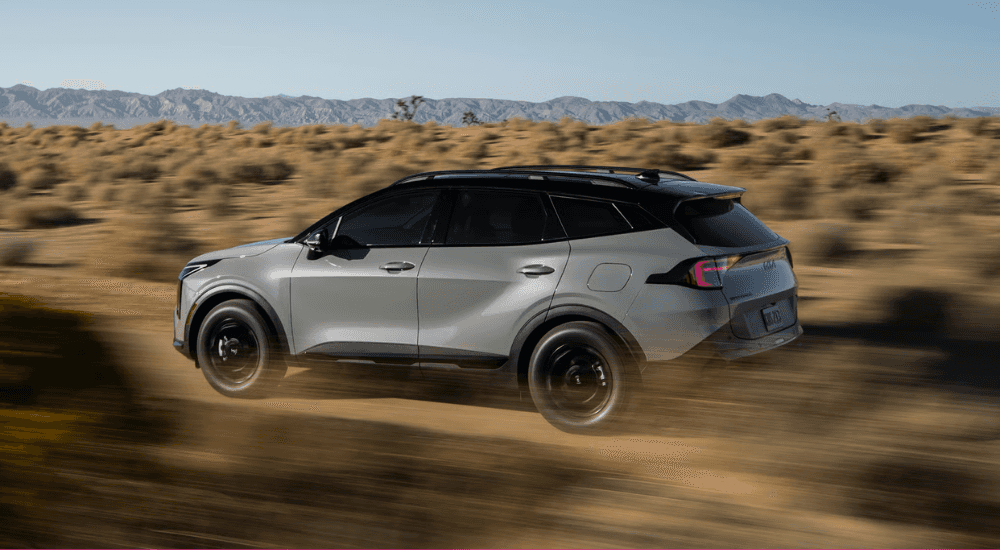
There is no question that the 2026 Sportage will complement your life in Clinton and effortlessly navigate the East Tennessee landscape. However, there are a few other factors to consider beyond hp, torque, and fuel efficiency.
Initial Investment: Value and Trim Options
The 2026 Sportage is one of the most value-packed SUVs in its class, boasting a well-equipped cabin with class-leading dimensions and an expansive digital landscape. Kia uses the Sportage’s trim family to differentiate the gas, hybrid, and plug-in hybrid models. How so?
The gas-powered Sportage debuts in 2026 with a starting MSRP of $28,690 for the well-equipped LX.[a] Defying every expectation of a base trim, the Sportage LX has 12.3-inch dual panoramic displays, wireless Apple CarPlay and Android Auto, LED lighting, a leather-wrapped steering wheel, an extensive suite of driver-assist technologies, and Smart Cruise Control with Stop & Go. The Sportage LX sets a high baseline for the rest of the lineup, which includes the EX, X-Line, SX, SX Prestige, and X-Pro Prestige.
The 2026 Sportage Hybrid offers the same standard features, with a slightly higher starting MSRP of $30,290 for the entry-level LS. Its trim family is more streamlined, with the S, EX, X-Line, and SX Prestige.[a]
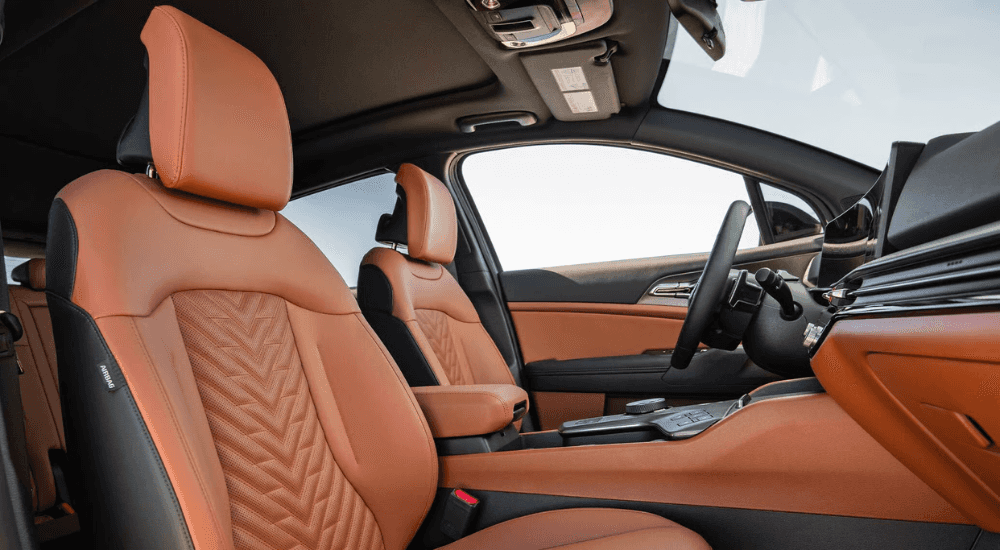
As expected, the 2026 Sportage PHEV is the most expensive, with a starting MSRP of $40,490.[a] It exudes exclusivity with its two-trim lineup, featuring the X-Line and X-Line Prestige, which offer significantly more standard features than their gasoline and hybrid siblings. For example, the all-wheel drive PHEV features a panoramic sunroof, a 10-way power driver’s seat with power lumbar support, premium SynTex seating, a wireless phone charger, heated front seats, and a Smart Power Liftgate.
Interior Details: Class-Leading Dimensions
The 2026 Sportage, Sportage Hybrid, and Sportage PHEV offer class-leading cargo room and rear legroom, maximizing the SUV’s versatility and adaptability. However, it’s important to note that the Sportage’s cargo volume is dependent on its powertrain.
The 2026 Sportage, equipped with a traditional gas engine, offers the most cargo volume, at 74.1 cu.ft, with 39.6 cu.ft. Available behind the second row. The 2026 Sportage Hybrid has slightly smaller volumes of 73.7 and 39.5 cu.ft, a nominal difference that is hardly noticeable. However, that’s not the case with the 2026 Sportage PHEV, which has a total capacity of 65.5 cu.ft, leaving 34.5 cu.ft behind the second row.
Everyday Experience: Driving, Refueling, and Recharging
The 2026 Sportage uses its compact footprint to its advantage, delivering an agile and responsive experience in any situation. That responsiveness skyrockets with the hybrid and plug-in hybrid powertrains, leading to one final consideration – refueling the tank and recharging the battery.
The 2026 Sportage Hybrid aligns with what you know: you only have to worry about keeping the tank full of fuel, with its small battery recharging as you drive. However, the 2026 Sportage PHEV features an additional component — a 13.8 kWh battery that requires recharging to maximize the Sportage’s performance. Fortunately, recharging is as simple as plugging the Sportage PHEV into a dedicated outlet in your garage. If you forget, the Sportage PHEV operates like a hybrid as long as there’s fuel in the tank.
Finding the Perfect Fit
How do you choose between the 2026 Sportage, Sportage Hybrid, and Sportage PHEV? First, consider your budget and the model that aligns with your financial situation.
Are you willing to make a larger initial investment in a model like the Sportage Hybrid or Sportage PHEV, knowing you’ll recoup that money with its better fuel economy and more value-oriented packaging? Or do you prefer a lower starting price?
0 comment(s) so far on 2026 Kia Sportage Hybrid vs Gas Models: Which Is Right for You?